

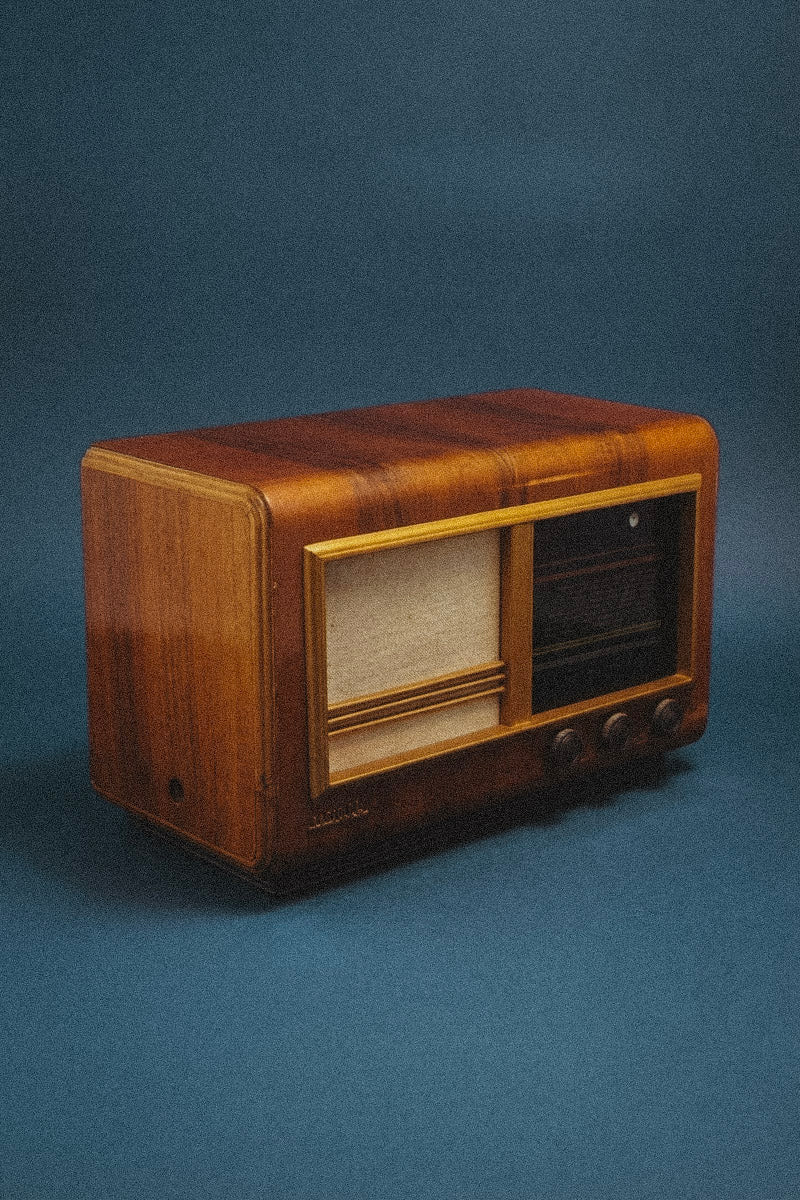
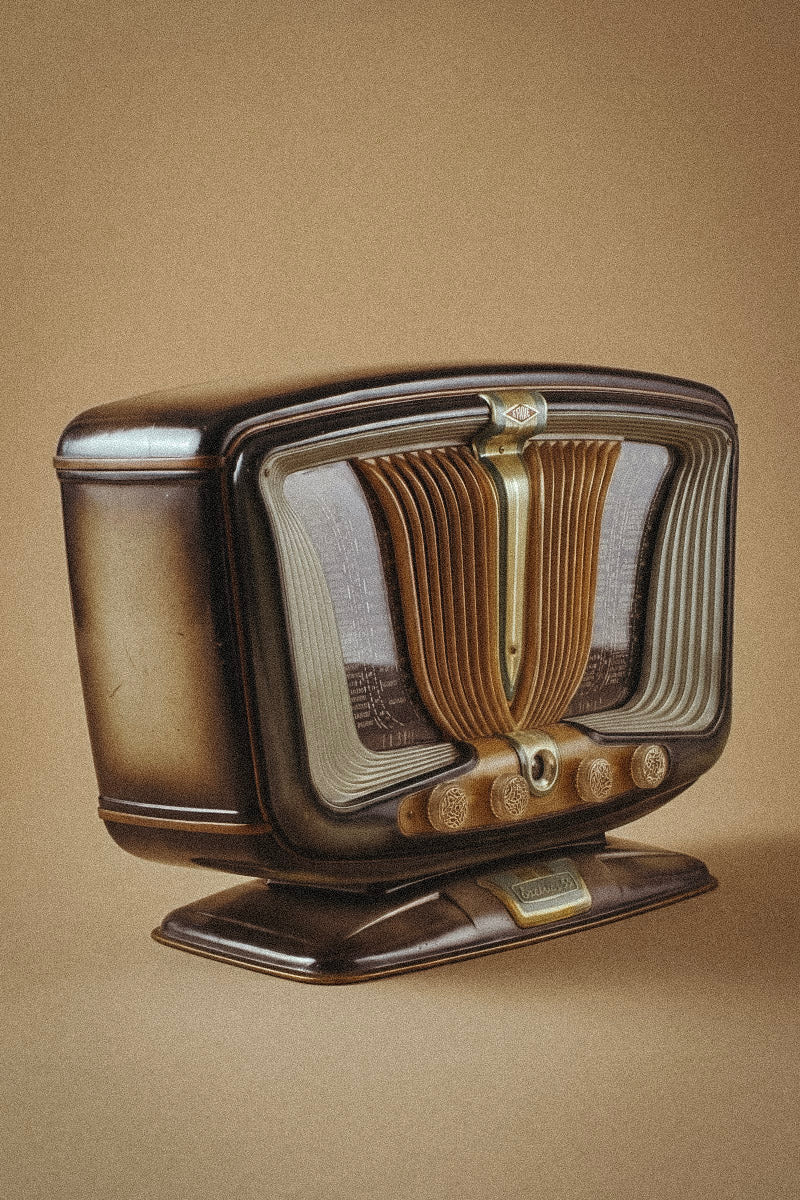
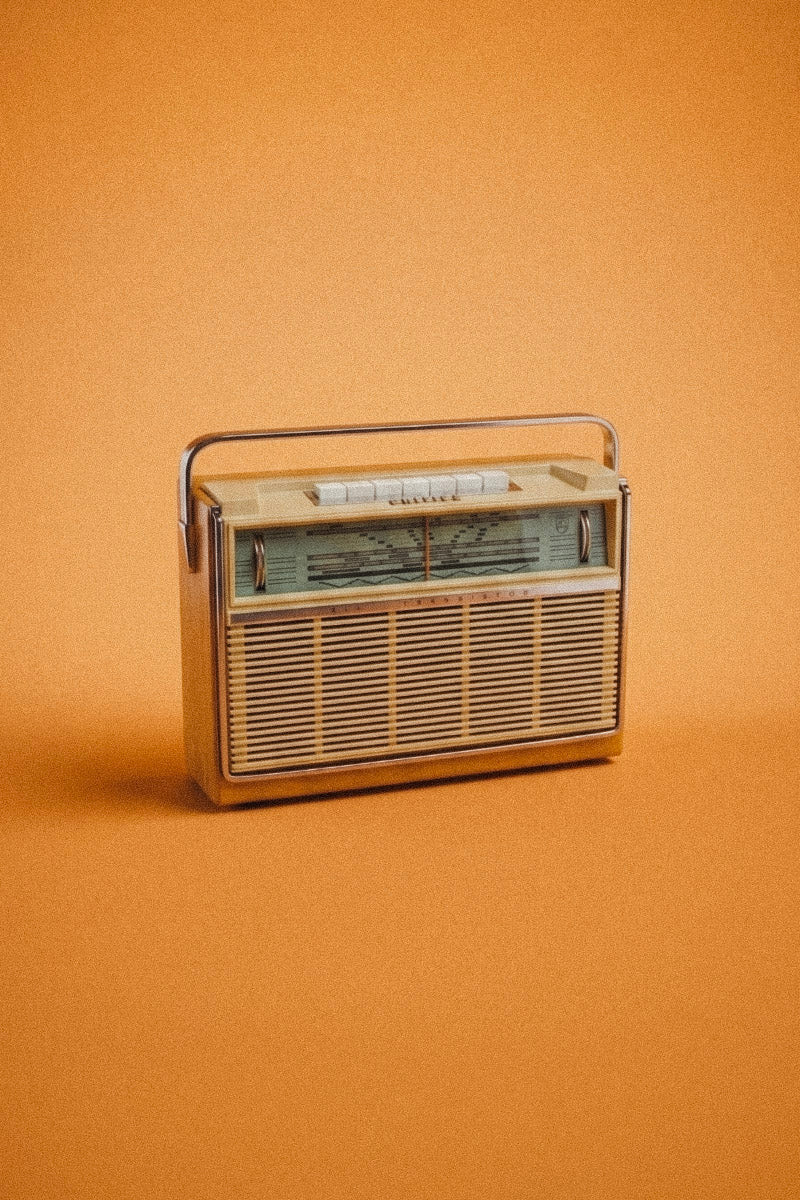

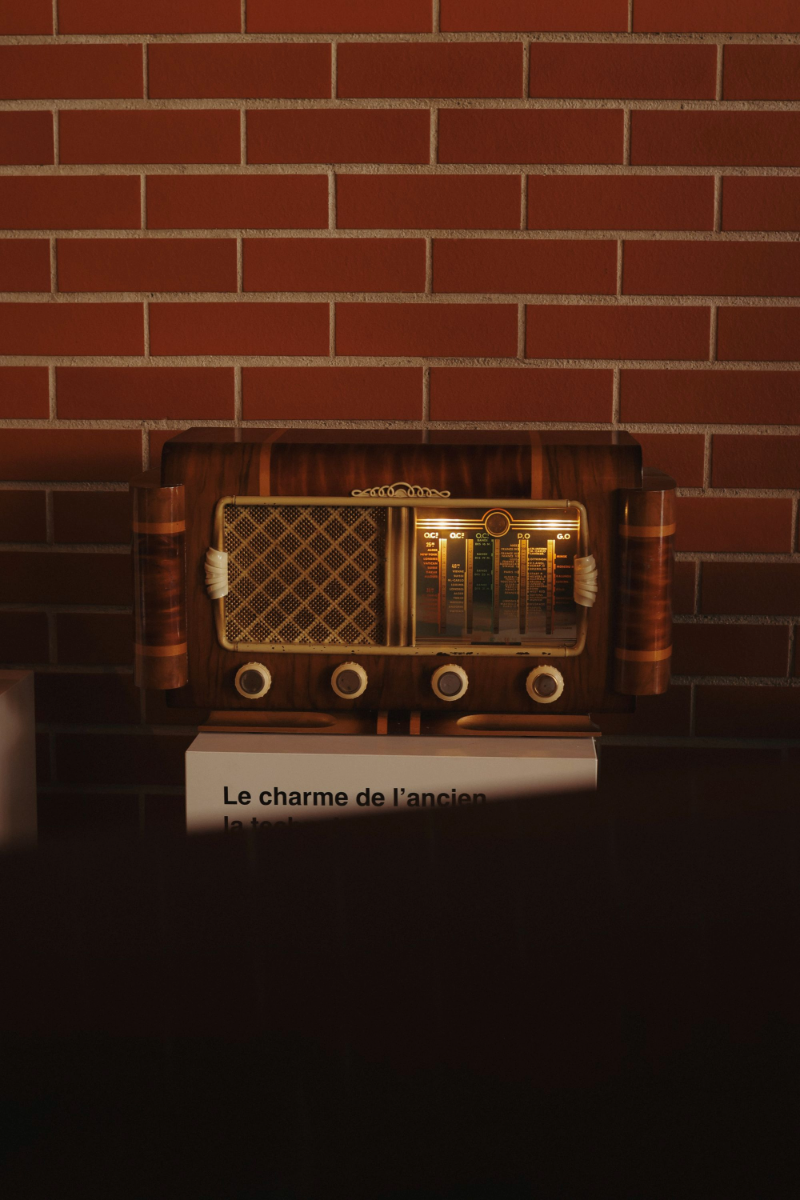



All it takes is a turn of the knob, a slight crackle, and an orange light behind a fabric grille for us to be transported decades into the past. In our workshop, certain radios have this magical ability to stir the collective memory. Among them, one brand comes up often: Grundig .
An icon of the golden age of radio, Grundig symbolized an era when electronics were synonymous with elegance, reliability, and innovation. These varnished wooden devices continue to stand the test of time, and it's no coincidence that they're found on our workbenches, ready for an upgrade.
But what do we really know about Grundig ? Where does this brand that has made its mark on the history of European audio come from? And why does its design and sound still fascinate today?
This is what we invite you to (re)discover through this article.
The origins of Grundig: the sound of an era
When we talk about vintage radios , one name almost always comes up: Grundig . But before becoming an icon of consumer electronics, the German brand was first born from a tense historical context and an extraordinary spirit of ingenuity.

Max Grundig - Source: Grundig
It was in 1945 , in post-war Germany, that Max Grundig actually founded the company that would bear his name. At the time, everything was in short supply: resources, materials, hope. And yet, he found a brilliant solution to circumvent taxes on electronic devices: offering customers the chance to build their own radio .
Thus was born the Heinzelmann , a DIY radio that has now become a collector's item. This simple but clever model marked the beginning of an incredible story. Very quickly, the small company made a name for itself. Thanks to its sound quality , reliability and simple but elegant design , Grundig radios found their way into German homes, and later throughout Europe.

Radio: Heinzelmann - Sources: Grundig
In a world where music and news were transmitted only by radio waves, owning a Grundig radio was much more than listening to a program: it was affirming a certain taste for beauty , for durability , for vintage , long before the word became fashionable.
Grundig in homes: between prestige and innovation
In the 1950s and 1960s, owning a Grundig radio was a statement of taste and modernity. The German brand quickly established itself as a symbol of quality, innovation, and elegance in the world of vintage radios .
Among the most emblematic models of this era, we find:
- Grundig Majestic 1088 : Launched in the late 1950s, this tube radio stands out for its refined design and exceptional sound quality.
- Grundig Satellit 210/Transistor 6001 : Appearing in the 1970s, this multiband model offered worldwide reception, appealing to international radio enthusiasts.
- Grundig Yacht Boy 210 : This portable radio, launched in the 1970s, combined compactness and performance, ideal for use on the move.
- Grundig Concert Boy 1100 : With its elegant design and audio performance, this 1960s model has become a classic sought after by collectors.
These vintage radios , in addition to being functional, were designed with particular attention to aesthetic details. Noble wood, quality acoustic fabrics, Bakelite buttons. Concretely, each element reflected German know-how and the desire to create durable and elegant objects.
Today, these iconic models continue to fascinate. Their presence in contemporary interiors testifies to a renewed enthusiasm for vintage , where authenticity and history combine with modernity.
It should also be noted that Grundig diversified its products in the 1950s: televisions, tape recorders, car radios , and later, cassette players and hi-fi systems. The German company anticipated the needs of modern homes and established itself as a global player in consumer electronics. This multiple know-how, always guided by the quest for quality and durability , allows Grundig to enter every room of the house.

Discover our Grundig Vintage 50's Bluetooth Radio
Decline, Asian competition... and rebirth
In the 1980s, the consumer electronics landscape underwent a radical transformation. Asian manufacturers, particularly Japanese ones, flooded the market with innovative and affordable products, putting traditional European companies under strain. Grundig , despite its prestigious heritage in vintage radios and household appliances, struggled to keep up with the frantic pace of innovation and cost-cutting.
Despite attempts at diversification, the German brand was racking up losses. Restructuring efforts and planned partnerships were unsuccessful, and in April 2003, Grundig filed for bankruptcy after years of financial decline.
However, Grundig 's story doesn't end there. In 2007, the Turkish conglomerate Arçelik A.Ş., owner of the Beko brand, acquired Grundig, breathing new life into this iconic brand.
Under this new leadership, Grundig is reinventing itself, combining its heritage of quality and design with modern technologies. The brand is returning to the forefront, offering products that combine vintage aesthetics with contemporary functionality.
When Grundig returns to the workshop
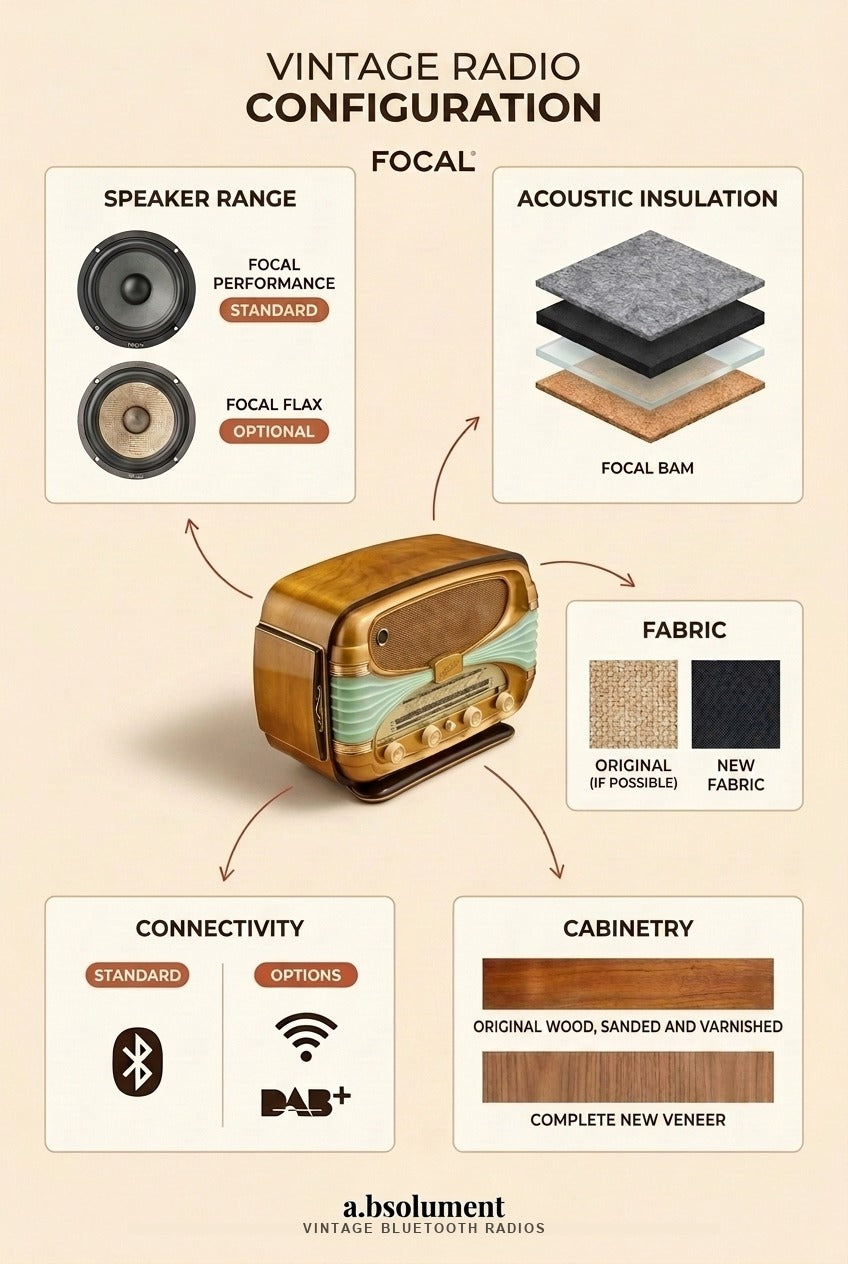
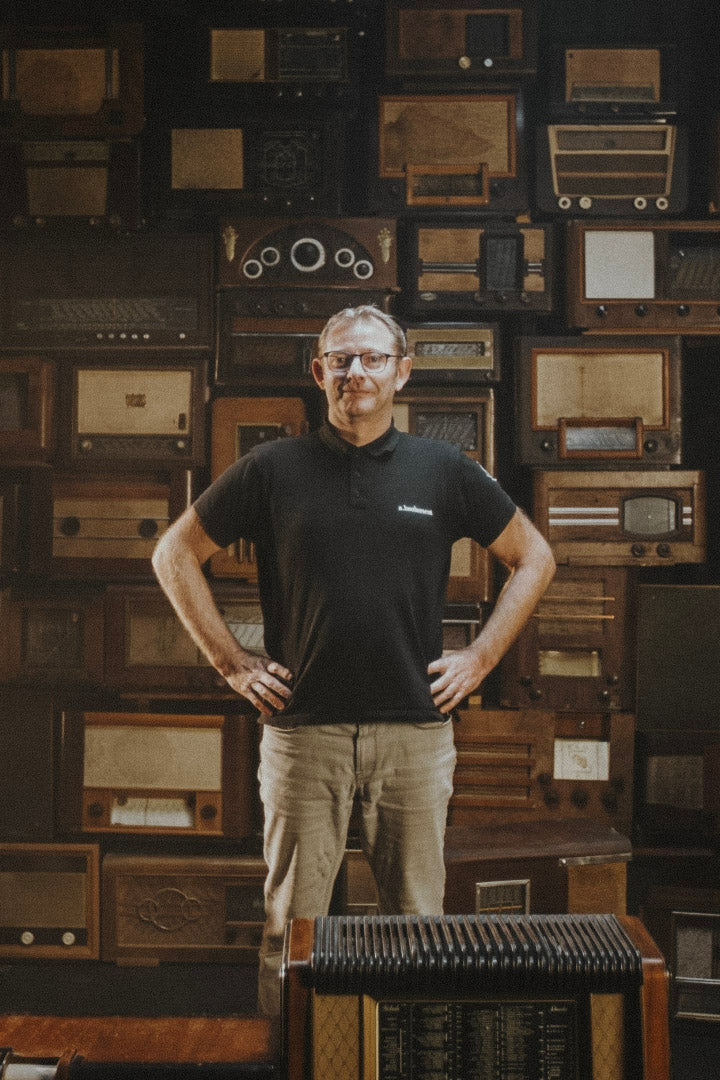
Today, in our workshop, we are witnessing this resurgence. Enthusiasts are rediscovering the charm of vintage Grundig radios , and we have the privilege of modernizing these historic pieces, giving them a second youth while preserving their original soul.
We are fortunate to come across these icons of the past. Models like the Grundig Satellit , the Concert Boy , and the famous Grundig Musikschrank come into our hands with a mission: to bring them back to life. Through meticulous restoration and modernization, we transform these treasures of the past into functional appliances adapted to our time, without distorting their soul.

Discover the Grundig Vintage 70's Bluetooth Transistor
Modernizing a vintage radio means extending a story, maintaining an intergenerational bond, and choosing a durable object, far from the logic of disposable consumption. For many, it is also a way to anchor a bit of vintage in a modern interior, combining retro charm and current technology.